Basement Waterproofing in Louisville: Seep, Sewer or River?
Water reaches a Louisville basement three ways: through walls and floor from soaked ground, up a floor drain when the sewer backs up, or overland when a creek or the river rises. Each has its own fix, and the sewer district has programs touching two of them.
Basement waterproofing in Louisville runs $6,000–$12,000 for an interior drain and sump and $10,000–$18,000 for exterior work, per HomeGuide (2026). Before either, MSD pays $100 per downspout disconnected from the wastewater system, after its own inspection.
Where is the water in your basement coming from?
- Seepage. Water along the joint between wall and floor, or through a crack, a day or so after heavy rain. That is groundwater, and drains, sumps, grading and crack repair deal with it.
- Sewer backup. Water rising through a floor drain, toilet or shower, often with a sewage smell, during a storm. That is the sewer line, and a backwater valve is the usual fix.
- Flooding. Water arriving overland from a creek or the river. That is a matter for floodplain rules and flood insurance as much as waterproofing.
Start with downspouts and grading
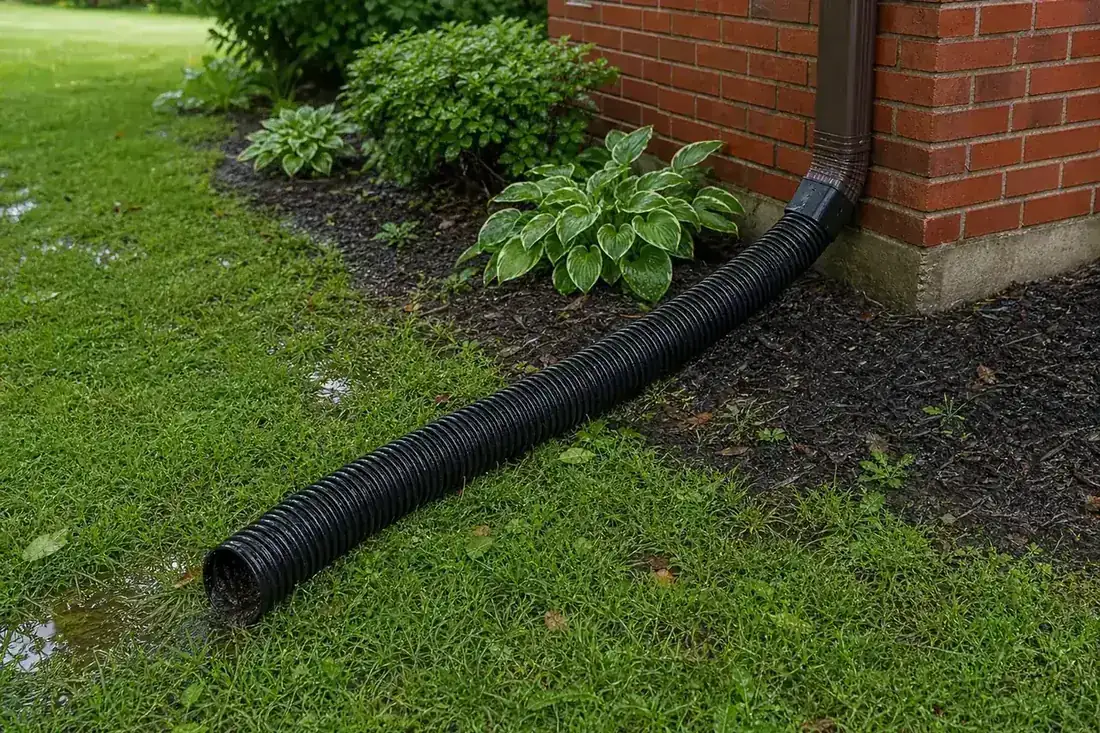
May is Louisville's wettest month, at 5.18 inches on average, and the airport sees 33.5 days a year with half an inch or more (NOAA 1991–2020 normals). Roof water dropped beside the wall is the cheapest leak to stop. MSD's Downspout Disconnection Program starts with an inspection, which must come before any work; MSD checks each downspout and pays a one-time $100 for each one disconnected from the wastewater system. Its suggested alternatives include rain barrels, piping away from the house, a French drain or a turnout with a splash block. HomeGuide (2026) puts regrading at $1,000–$5,000 and replacing downspouts at $220–$625.
Interior drain and sump, or digging outside?
An interior system cuts a channel along the inside of the footing, lays perforated pipe in gravel and runs it to a sump pump. HomeGuide (2026) puts the drain at $4,000–$17,000 and a sump at $600–$2,500 or more. Exterior waterproofing digs down to the footing, adds a membrane ($4–$7 per square foot) and a drain ($30–$90 per foot), and totals $10,000–$18,000. Poured walls that leak at one crack can often be sealed by injection, at $250–$800 per crack (HomeGuide, 2026); block walls hold water in their hollow cores, so injection rarely stops them. A wall that leaks and also leans needs the bowing wall work too. Costs sit together in the Louisville foundation repair cost guide.
Near a creek or the Ohio River? Check the floodplain rules first
MSD says that to build, develop or repair in a floodplain, both the Kentucky Division of Water and MSD require permits. Louisville Metro's ordinance also covers work within 25 feet of the top of the bank of an intermittent or perennial stream, and a repair costing more than 50% of the building's market value counts as a substantial improvement, with stricter rules. MSD points homeowners to LOJIC's online maps to check an address, and FEMA's flood maps show the mapped flood zones. Louisville Metro holds Community Rating System Class 3, which MSD says can mean up to a 35% discount on flood insurance premiums.
Sewer backups need a different fix
A sump pump will not stop water coming up a floor drain. MSD's floodproofing advice is to consider backwater valves, which let water leave the house but close when sewer water tries to come back in, and MSD runs a Plumbing Modification Program for basements hit by sewer backups; check current eligibility with MSD. Work on drain lines is plumbing, and Kentucky's Department of Housing, Buildings and Construction licenses plumbers, so ask whose license covers that part of the job.
Questions homeowners ask
Will a sump pump stop water coming up my floor drain?
No. A sump pump removes groundwater collected around the foundation. Water rising through a floor drain during a storm is usually the sewer backing up, and the fix for that is a backwater valve on the sewer line. MSD's floodproofing advice suggests backwater valves, its Plumbing Modification Program covers some backup cases, and the drain work itself needs a state-licensed plumber.
Describe what you are seeing
Two or three lines is enough: roughly when the house was built, whether the basement is block, poured or stone if you know, and what changed. A wall leaning in, brick cracking at a corner, water along the floor after rain. One independent specialist who works around Louisville reads it and gets in touch.