The Ground Under Louisville Foundations: Limestone, Shale and River Sand
Jefferson County packs three kinds of ground into one city. Knowing which one is under your house explains much of what its foundation does, and it tells you what to ask before anyone digs.
Louisville sits on limestone and shale uplands, with karst in the eastern and central county, and on Ohio River sand and gravel near the river. The Kentucky Geological Survey has mapped 1,104 sinkholes in Jefferson County, and the soil survey rates 64% of its rated land very limited for basements.
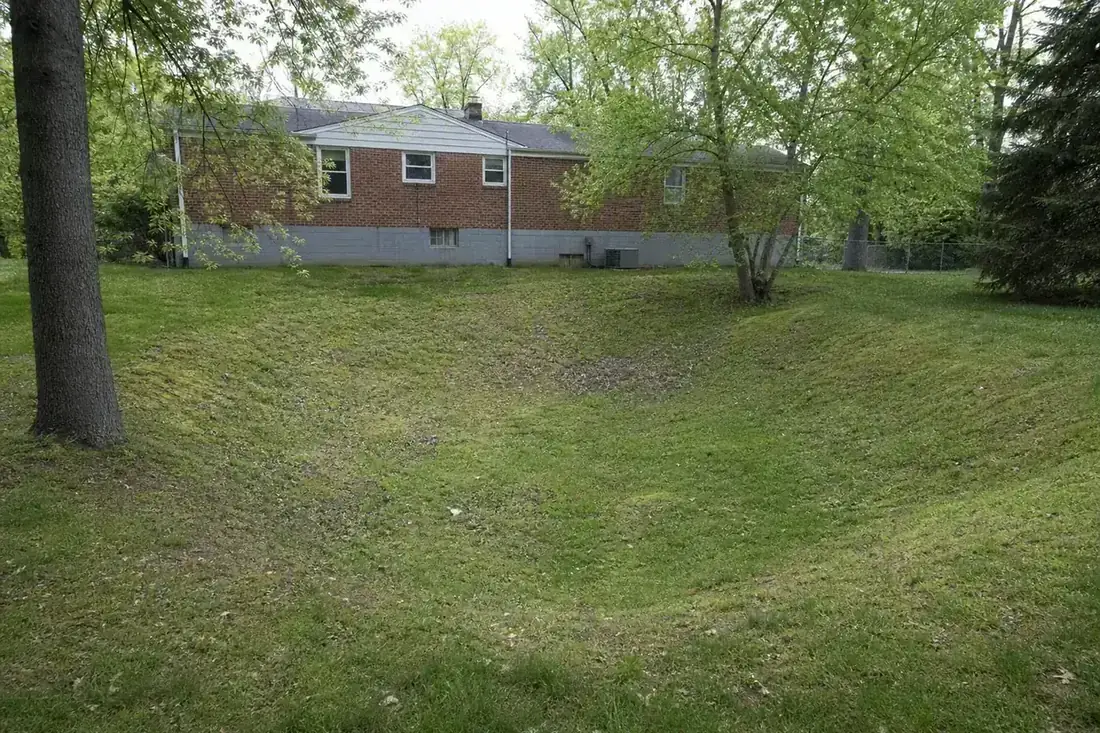
Limestone uplands and the karst
The Kentucky Geological Survey places Jefferson County's karst geology in the eastern and central parts of the county. The most widespread named soil there, Crider (about 14,800 acres), formed in wind-blown silt over limestone residuum, and its official description notes that many areas are rolling karst topography. Faywood and Caneyville are thinner soils over limestone (USDA NRCS). Karst forms as rainwater slowly dissolves cracks in limestone; soil then washes down into the widened cracks until the soil above gives way. KGS stresses that the collapse happens in the soil cover, not the rock.
How many sinkholes has Louisville got?
KGS mapped sinkholes statewide from LiDAR, laser elevation data; Jefferson County's was supplied by LOJIC and flown in 2009. The layer counts 1,104 sinkholes in Jefferson County, against 1,550 in Bullitt, 3,167 in Oldham and 15,946 in Hardin. KGS says field checks found over 85% of the mapped features to be real sinkholes and labels the data provisional. In Kentucky the soil over limestone is usually less than 25 feet thick, so cover collapses more than 20 feet across are uncommon, and KGS says they are unlikely to swallow a house, though they can badly damage one. Its strongest advice is to avoid building or buying over a sinkhole that has been filled.
Sand and gravel along the Ohio
Near the river the ground is made by water. Wheeling soils on the terraces are loamy river deposits over sand and gravel, and Nolin soils cover flood plains (USDA NRCS). KGS describes the Ohio River alluvium as the county's best source of groundwater, and a 29-mile system of floodwalls, gates, pumping stations and levees protects much of the low ground. These soils barely swell, with linear extensibility near 1.5%, but the survey cites a high water table and flooding across much of them, which makes water, not clay, the main basement question. See basement waterproofing.
Shale slopes in the southwest
Shrouts, the county's second most extensive named soil at about 11,500 acres, formed from calcareous shale with dolomitic siltstone, and Beasley from shale, siltstone and limestone (USDA NRCS). On steep ground shale soils can creep, and KGS notes drainpipes and limestone riprap placed on the shale slopes of the Muldraugh Escarpment near the Gene Snyder to prevent slope instability. Slope is cited as a limitation on about half of the county's rated land for basements. Houses cut into hillsides take extra soil load on the uphill wall; see bowing basement walls.
Frost depth, freeze nights and heavy rain
The Kentucky Residential Code sets 24 inches as the minimum frost-protection depth for footings in Jefferson County. Louisville's airport station averages 74 nights a year at or below 32°F, most of them from December to February, but only about 13 days that stay below freezing, and 12.8 days a year bring an inch or more of rain (NOAA 1991–2020 normals). FEMA counts eight federal disaster declarations for the county from 2016 to 2026, six of them for severe storms. If the house has already moved, start with settling and piers.
Sources
- Kentucky Geological Survey: Jefferson County land-use planning issues
- Kentucky Geological Survey: cover-collapse sinkholes
- USDA NRCS Official Series Description: Crider series
- USDA NRCS Official Series Description: Shrouts series
- 2018 Kentucky Residential Code (Kentucky Department of Housing, Buildings and Construction)
Describe what you are seeing
Two or three lines is enough: roughly when the house was built, whether the basement is block, poured or stone if you know, and what changed. A wall leaning in, brick cracking at a corner, water along the floor after rain. One independent specialist who works around Louisville reads it and gets in touch.