Foundation Warning Signs, Sorted: Watch It, Measure It, or Ask
Most foundation questions start with one thing noticed in passing. Below, each sign gets a short answer and one of three labels: watch it, measure it over a season, or ask a specialist to look.
Most foundation warning signs in Louisville houses trace to wet clay, frost or roof water, and a single hairline crack is usually cosmetic. A sideways crack in a block wall, a wall leaning in, or a new bowl-shaped dip in the yard deserves a specialist's look; KGS wants reports of collapses as small as 1 foot across.
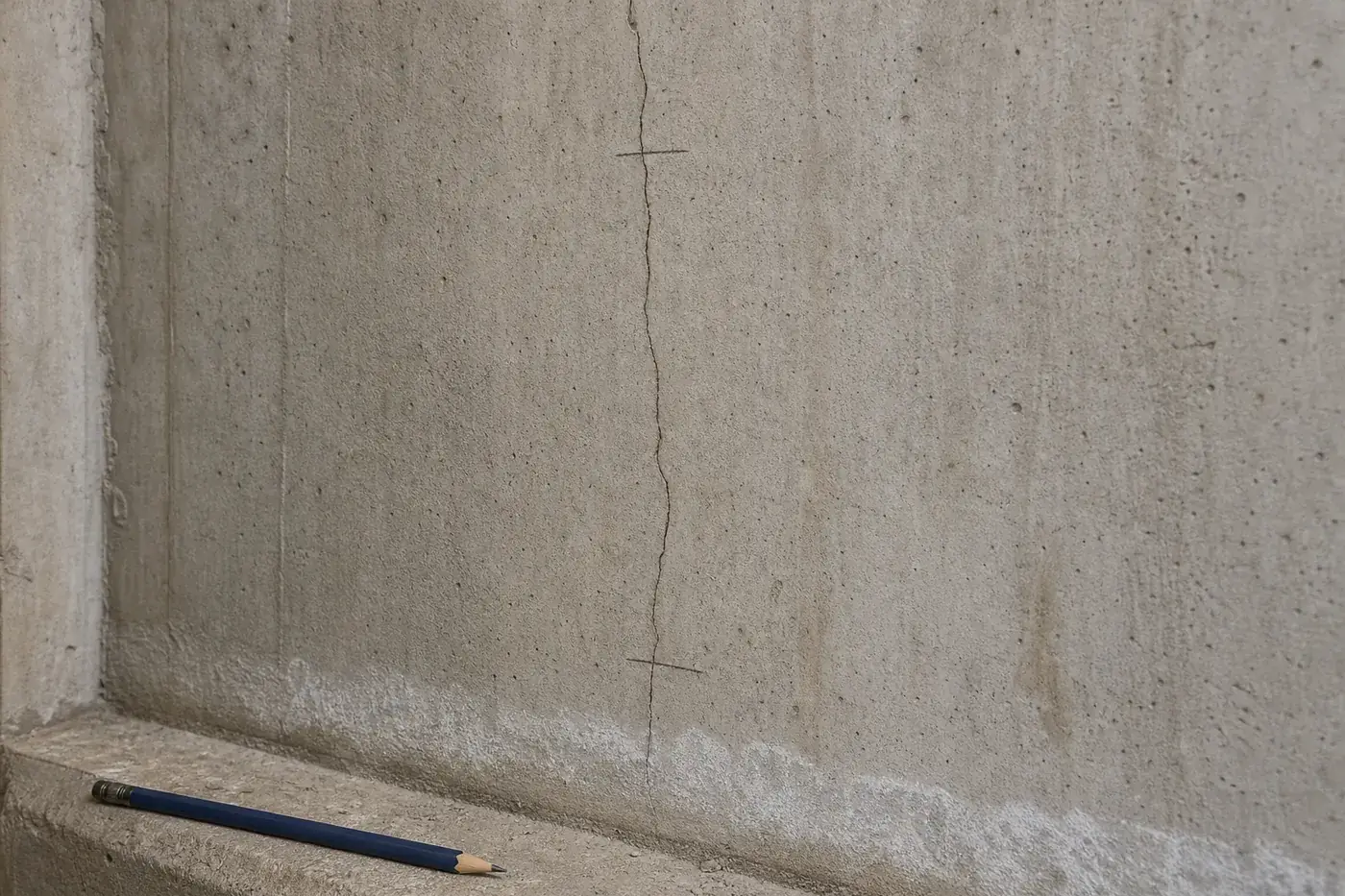
A thin vertical crack in a poured basement wall: is it serious?
Watch it. Thin vertical cracks in poured concrete often come from shrinkage as the wall cured. Draw a short line across each tip and write the date beside it. If it stays put and dry, it is cosmetic. If it leaks, injection is the common fix, at $250–$800 per crack (HomeGuide, 2026). See basement waterproofing.
What is the white crust on my basement wall?
Watch it. It is efflorescence, mineral salt left behind when water moves through masonry and dries on the surface. It points to moisture, not to a structural problem. Brush it off and see where it returns, then check that the downspouts and soil outside that wall send water away from the house.
Why is there a stair-step crack in my block basement wall?
Measure it. A crack that zigzags through the mortar joints shows the wall has flexed. Mark the ends and measure the widest point each season. If it widens, or one side of the crack sits farther into the room than the other, ask a specialist. See bowing basement walls.
What does a long horizontal crack in a block wall mean?
Ask. A sideways crack along one course of block, often near mid-height, usually means soil outside is pushing the wall inward. Hold a long level against the wall from top to bottom; if the middle sits proud of the top and bottom, the wall is bowing. See bowing basement walls.
Why do my doors stick and the drywall crack above them?
Measure it. Seasonal sticking often follows clay drying and swelling. University of Kentucky extension specialists note that out-of-square door frames and drywall cracks can also be early signs of a forming sinkhole, and that clay shrink-swell causes the same signs. Note the gap above the closed door in each season. See settling and piers.
Is a bowl-shaped dip or curved crack in the yard a warning?
Ask. KGS lists shallow depressions and arch-shaped cracks in the soil as signs to look for on karst ground. Keep roof water away from the spot, do not fill it with loose dirt, and have a geologist or engineer look if it is near the house. KGS asks for reports of new collapses. See Louisville's ground.
Why is the brick cracking in steps at an outside corner?
Measure it, then ask if it grows. When the footing under a corner drops, brick cracks along its mortar in a staircase, often wider at the top. Corners dry from two sides and catch downspout water, so they move first. Check whether a nearby door or window has started to bind. See settling and piers.
Why does water appear along the basement floor edge after heavy rain?
Measure it. Note which wall, how long after the rain, and how much. Water at the joint between wall and floor is groundwater pushing in under pressure. Fix downspouts and grading on that side first, since they cost least, then consider a drain and sump. See basement waterproofing.
Why does water come up through the basement floor drain?
Ask. Water rising through a floor drain during a storm, especially with a sewage smell, is the sewer backing up rather than seepage. A backwater valve on the sewer line is the usual fix, and MSD runs a program for some backup cases. See basement waterproofing.
Is crumbling mortar in an old stone or brick foundation a problem?
Measure it, and ask before it bulges. Soft lime mortar in a pre-1940 foundation wears away over decades, especially where water reaches it. Sandy, missing joints can be repointed with a compatible mortar. Stones that have shifted, or a section that bulges inward, need a specialist and possibly an engineer. See bowing basement walls.
Describe what you are seeing
Two or three lines is enough: roughly when the house was built, whether the basement is block, poured or stone if you know, and what changed. A wall leaning in, brick cracking at a corner, water along the floor after rain. One independent specialist who works around Louisville reads it and gets in touch.